
Single-family offices
A principal, a household, and a staff that has grown faster than the structure around it.
I serve as the outsourced Chief Security Officer for a small number of families and companies — the one person who sees the whole picture and tells you the truth about it. Twenty-five of those years were spent leading family office security for a prominent billionaire family.
If you are responsible for protecting a wealthy family, a family office, or a prominent executive, this is the whole proposition — what an outsourced Chief Security Officer does, what it costs you not to have one, and how the first conversation works.
The greatest risk is often not the security service you are missing. It is the space between the services you already have.
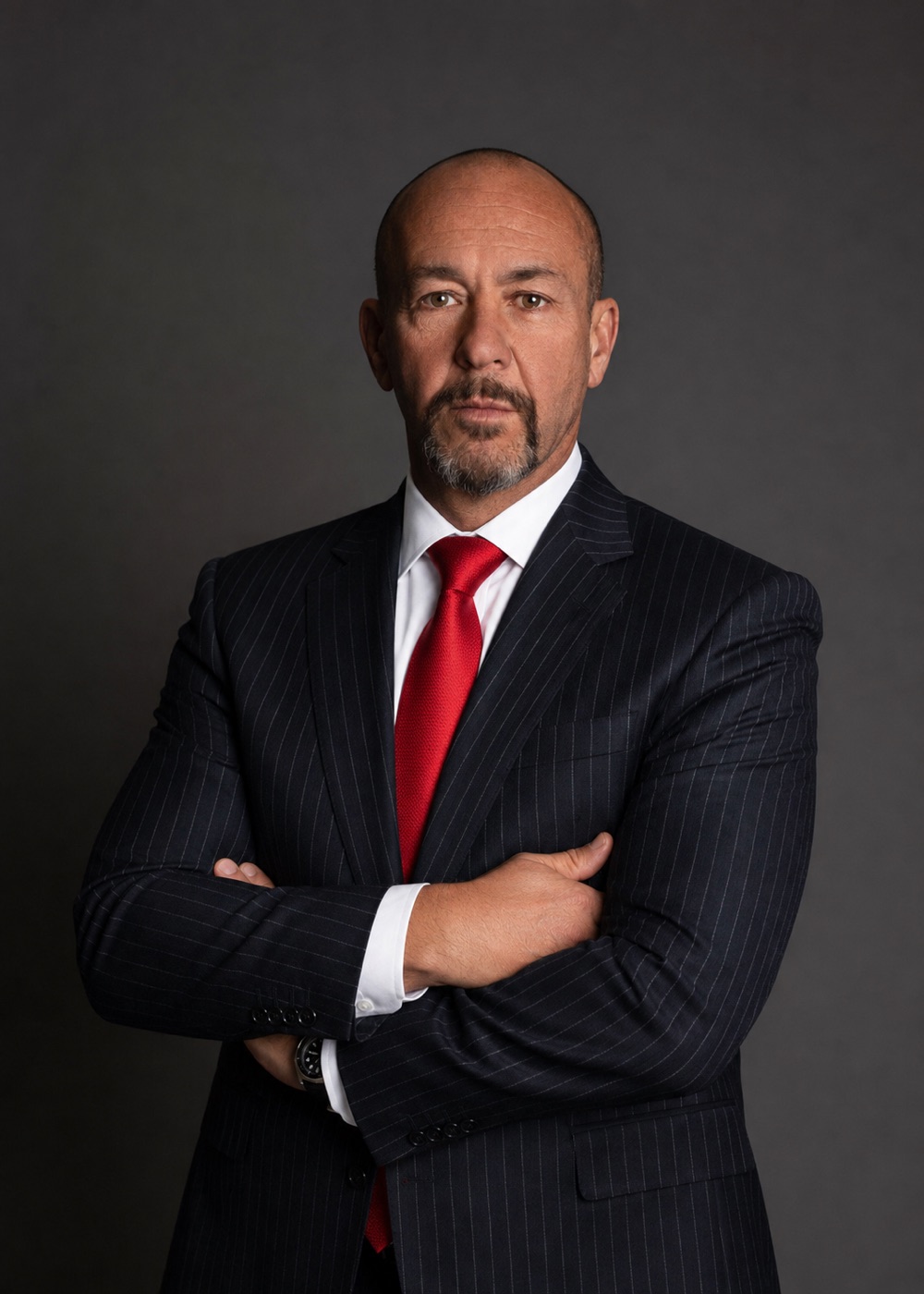
My career began with the Israel Defense Forces, in the Paratrooper Reconnaissance and Commando Unit, and continued into the Israeli Secret Service, where I was trusted with protecting a sitting President and Prime Minister. It expanded across diplomatic and aviation operations — the Israeli Consulate and El Al Israeli Airlines in Miami, Florida — and into the Miami Mayor’s Office, where I served as Sergeant at Arms. From there it moved into government, corporate security, executive protection, maritime operations, cyber risk, investigations, fraud, and crisis management.
But the experience that shaped my approach most was twenty-five years leading family office security for a prominent billionaire family, and heading the Executive Protection Department as a Vice President for a Fortune 500 corporation in Las Vegas. Not twenty-five years moving between short-term assignments. Twenty-five years serving one family — learning their world, earning their trust, protecting their privacy, adapting as the family changed, and being accountable when something needed to be handled.
I will not tell you the family’s name. Discretion is not a marketing policy. It is part of the service.
Professional references and letters of recommendation are available upon request.
This works even if you already have a guard company, an IT provider, a trusted driver, household staff, travel support, or an internal operations team. I am not there to replace capable people in order to justify my own role.
A principal, a household, and a staff that has grown faster than the structure around it.
Several families, one operation, and an exposure surface that belongs to no single client.
A sale, an inheritance, a separation, a generational handover — the moment the old program stops fitting the life.
A public profile and a private life, and the distance between what is known and what should be.
Where the company’s exposure reaches the executive’s family, and nobody owns the line between them.
Answerable for a duty of care they currently have no independent way to verify.
If I am not the right person for your situation, I will tell you that too.
Good security advice begins with understanding the problem — not selling a predetermined solution.

Theyaskhowmanyguardsyouneed.
Iaskwhoownsthespacebetweenthem.
The biggest lie in private security is that more security automatically means better security. More guards. More cameras. More technology. More vendors. More reports. But more pieces do not create one complete program — in some cases they create more confusion, more handoffs, and more places for critical information to disappear.
A family can spend a significant amount on protection and still have no clear answer when something happens at two in the morning.
If the answer is a list of different companies, no one owns the whole picture.
Every vendor you have is paid for a scope. Nobody is paid to look at the edges — and that is where things go wrong.
Doxxing is a digital threat that can become a physical one. A cloned voice becomes far more dangerous when it is backed by knowledge of the family's routines, relationships, and schedule.
I sell no guards, no cameras, and no software. There is nothing I can recommend that pays me. That is a P&L fact, not a slogan.
Movement patterns, schedules, and the predictability nobody has measured.
Access, keys, alarms, staff entry, and who still has a code from 2019.
Advance work, routes, jurisdictions, and what happens when a phone dies.
Data brokers, public records, and what a stranger can assemble in an hour.
Vetting, re-vetting, and the long-tenured employee nobody re-checks.
Where the company exposure reaches the family, and who owns that line.
Scopes, contracts, overlaps — and the edges each one stops at.
The space between all seven. Where the program actually fails.
Every engagement starts here. Eight areas, examined in order, delivered as a written program with a prioritized sequence — not a report you file.
›Vendor access review: one key inventory unreconciled.
›Data-broker removal confirmed for four household members.
The named security executive for your family or company. Vendor oversight, protective intelligence, travel advance, incident command, staff vetting, and the annual briefing.
Protective details, secure movement, investigations, fraud and scam response, crisis management. Scoped per engagement, available to retained clients first.
These are the first twelve questions I ask in a paid Risk & Readiness Assessment. The real one does not stop at twelve, and it examines your residences, your contracts and your people rather than taking your word for any of it. But these twelve are enough to show you which of the eight areas nobody currently owns.
About ninety seconds. No email, no name. The scoring happens in your browser and no answer leaves this page unless you choose to send it to me.
And if your program turns out to be adequate, this will say so, and I will tell you not to hire me. There is no version of this that ends in a proposal you did not ask for.
Has any of this happened in the last twelve months?
Select any that apply. Each of these changes who has access, who knows the routine, and who has a reason to look — which is why a program that was right before one of them is rarely still right afterward.
Eight areas, each marked owned, partial, or a seam that belongs to nobody. One page, on screen, the moment you answer the twelfth question.
Nobody hands a stranger the keys to their family on a first call. So the first step costs nothing, and the second one earns the third.
Forty-five minutes, just the two of us. It requires no information about your family. You are deciding whether you trust me. I am deciding whether there is real work here. No proposal gets sent afterward.
Routines, residences, travel, digital footprint, household and corporate staff, your existing vendors — and the seams between all of them. Delivered as a written program with a prioritized remediation sequence.
I become the named security executive. Vendor oversight, protective intelligence, travel advance, incident command, staff vetting, and the annual board or family council briefing. The assessment credits against your first month.
These are from fraud and scam engagements, in the clients’ own words and de-identified exactly as they were given. One of them ends with the money gone and unrecoverable, and it stays here for that reason.
“It was puzzling that law enforcement was unable to uncover pertinent information on my case; yet, it took you and your associates just three days to uncover — thus saving me additional financial loss, as well as, emotional anguish and trauma.”
You were extremely professional and detailed in your analysis. Throughout the entire process, you were not judgmental, expressing great empathy constantly.
“Words can’t express my gratitude for their swift and thorough action in educating and stopping me from imminent scam activity that could have wiped me out of $250,000.”
As a newly divorced single mom of three young children, every penny counts, and I should have reached out to you sooner.
“I am grateful for the way your team handled my case with dignity and confidentiality. Unfortunately, there is almost no road I can take to retrieve these funds; however, I am grateful to have had your support.”
I learned I had become a victim of a sophisticated scam and none of my so called texts, calls, emails and such were with real people.
“With their guidance and expertise, we uncovered the dangerous individuals behind the scam, individuals preying on vulnerable individuals like me.”
There are resources and people willing to help you navigate through the darkest of times.
Quoted as published, shortened where marked. I do not publish client names, do not use engagements as case studies, and do not confirm or deny that a family is a client — including to other clients.
You should know what this costs before you speak to me. If the range is wrong for where the family is right now, say so on the call and I will tell you what I would do instead.
The paid front door. Scoped on the orientation call, and the number does not move afterward.
The core relationship. I become the named security executive for the family or the company.
Protective details, secure movement, investigations, fraud response, crisis management.
I never quote a retainer before an assessment. The sequence is the point — the assessment is what earns the relationship, and if what you already have is adequate, that is what the program will say.